Audio codecs encode and decode sound, compressing it into packets suitable for faster or wireless transmission. Their efficiency affects transmission quality and speed. SBC is the default Bluetooth sub-band codec; concerns about latency and potentially lossy playback have led to alternatives such as Samsung's UHQaudio and Sony's LDAC.
The Main Codec Options
- SBC — Sub-band Coding: Mandatory for stereo Bluetooth headphones using the Advanced Audio Distribution Profile (A2DP), SBC supports bit rates up to 328 kbps with a sampling rate of 44.1kHz. It delivers reasonably good sound with modest encoding and decoding demands, though quality can fluctuate, particularly with an inexpensive Bluetooth transmitter.
- AAC — Advanced Audio Coding: Similar to SBC but offering better sound quality, AAC is associated primarily with Apple's iTunes platform and other non-wireless applications. The source describes it as relatively uncommon, especially in headphones.
- aptX: CSR's optional proprietary codec encodes more efficiently and at a slightly higher rate than SBC, making it suitable for demanding audio applications. aptX Low Latency targets delay, while aptX HD targets sound quality. Both transmitter and receiver must support the relevant codec or variation.
The source's comparison covers SBC and aptX because its authors had not found a reliable method for measuring AAC or LDAC wirelessly. They had also not yet tested headphones with aptX HD.
| Measure | Correlation with codec | SBC | aptX | aptX Low Latency |
|---|---|---|---|---|
| Sound quality | Weak | Average | Average | Average |
| Latency | Strong | Poor | Average | Good |
Sound Quality: Little Measured Difference
SBC serves most audio applications adequately: it is not especially lossy, and its delay should suit most streaming services. Critical listeners or trained ears may nevertheless detect subtle quality differences.
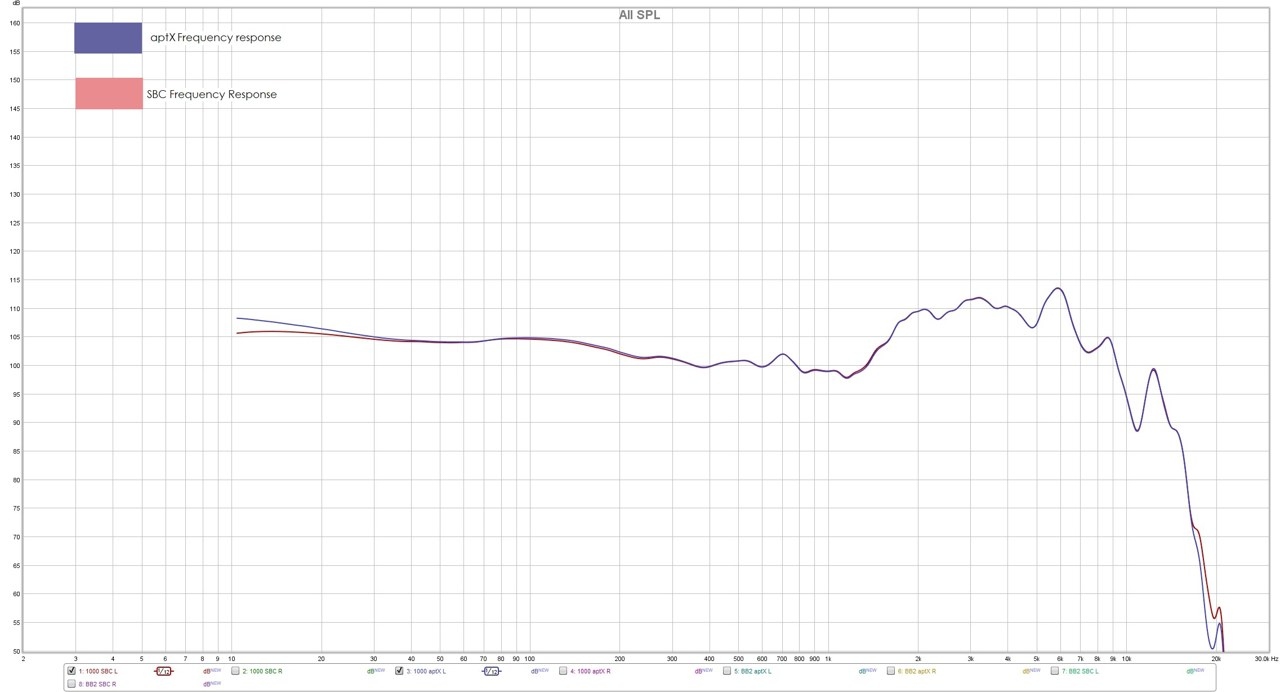
The source supplied aptX and SBC listening samples for the Sony MDR-1000X and Plantronics Backbeat Pro 2. Distinguishing the codecs by ear proved difficult. The authors also measured each headphone's Frequency Response and Total Harmonic Distortion with aptX enabled and with SBC instead.
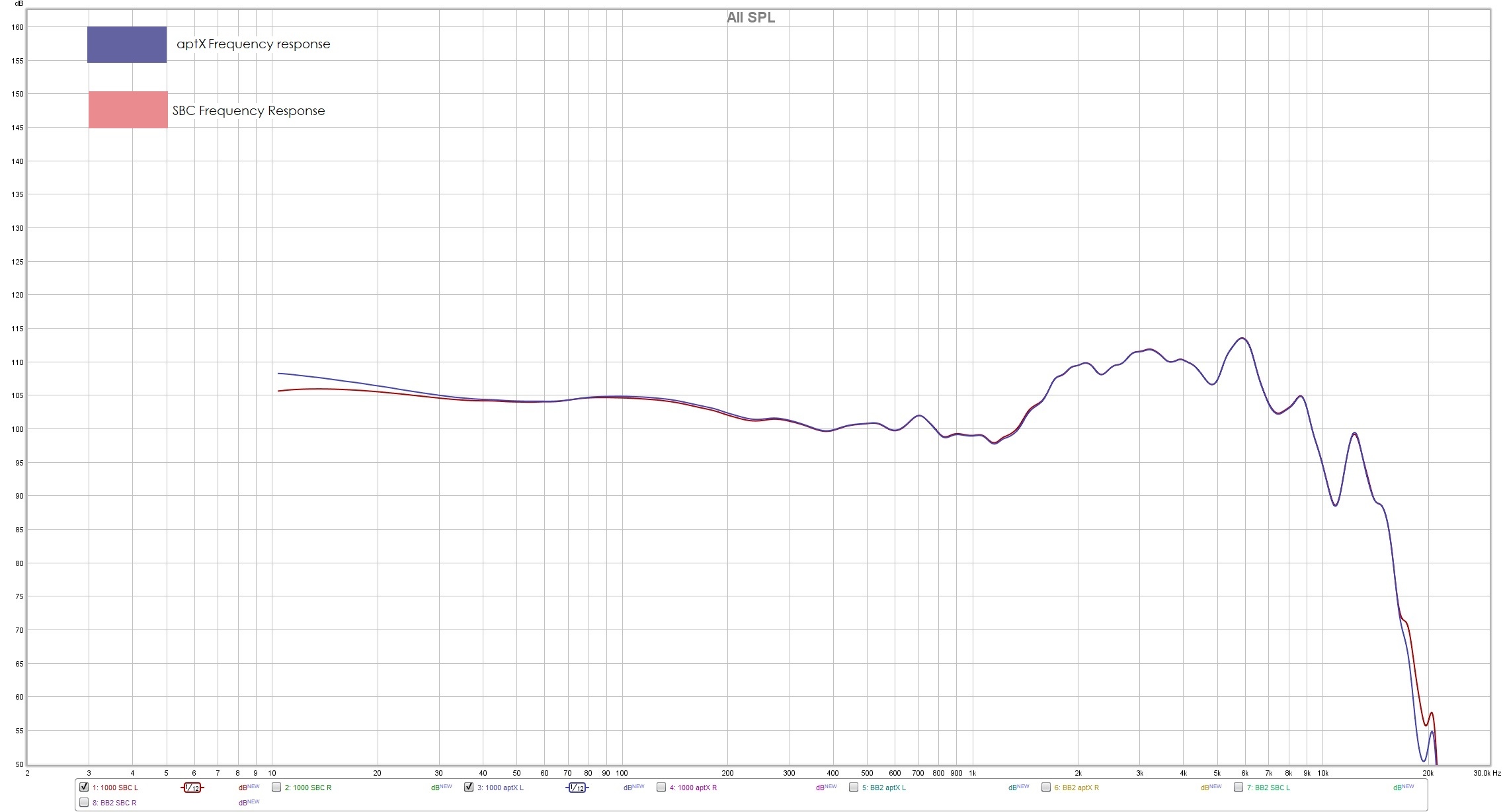 Frequency Response: Sony MDR-1000X
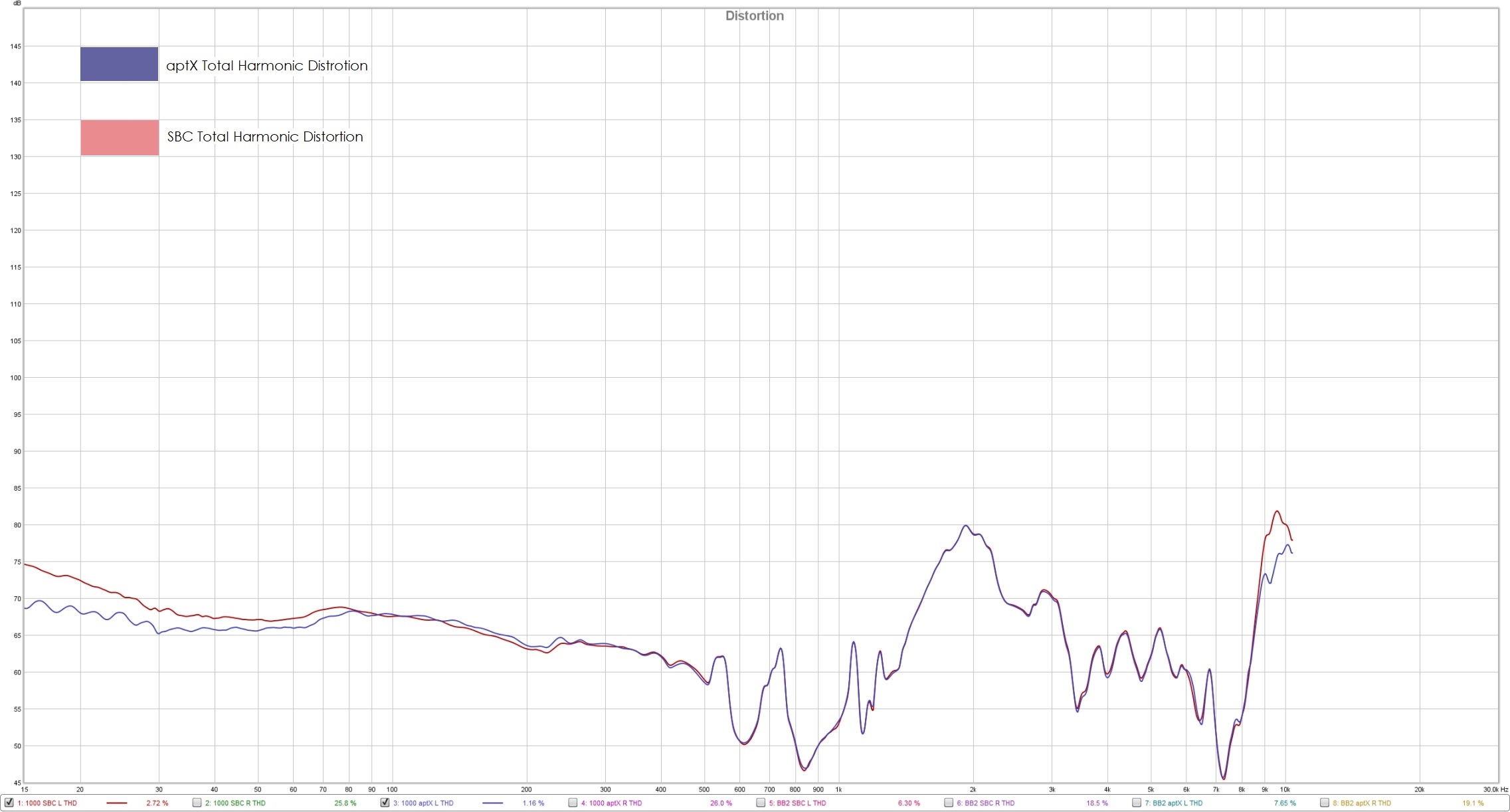 Total Harmonic Distortion: Sony MDR-1000X
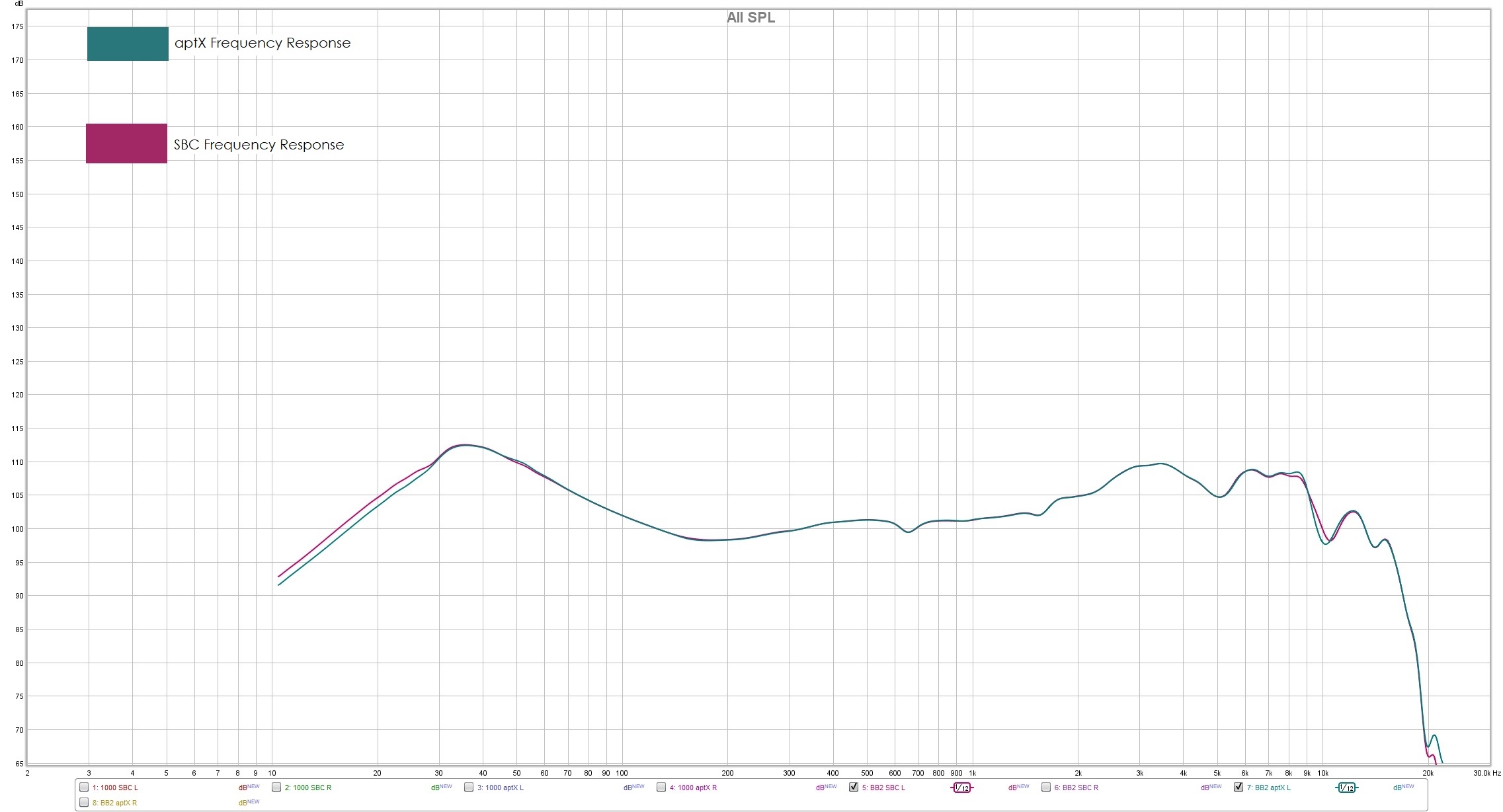 Frequency Response: Plantronics BackBeat Pro 2
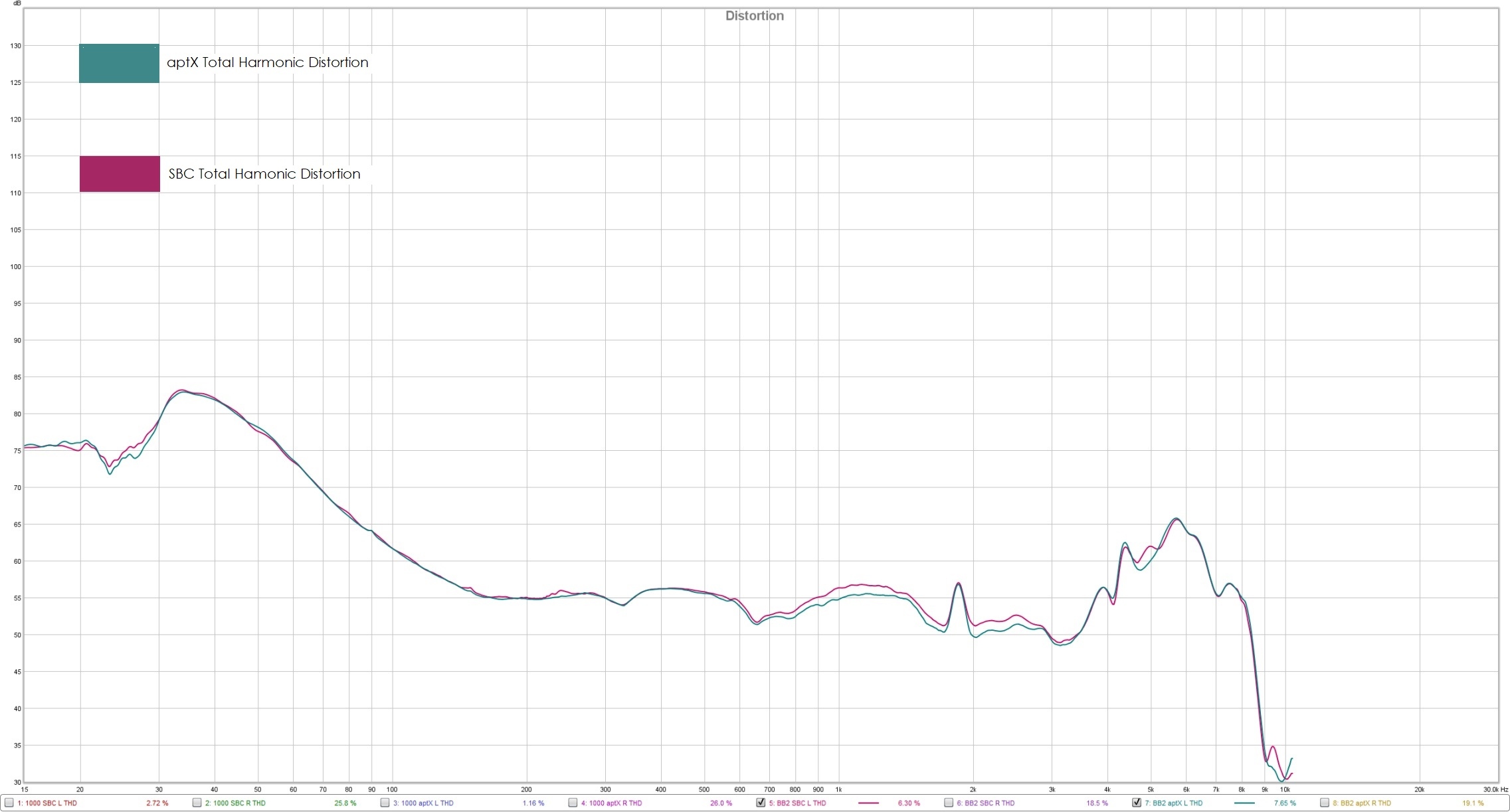 Total Harmonic Distortion: Plantronics BackBeat Pro 2
Both sets of measurements were virtually identical across codecs. This does not establish that codecs have no audible benefit: Frequency Response and Total Harmonic Distortion do not capture every subjective aspect of listening.
The authors reported developing a more accurate test bench incorporating PEAQ (Perceptual Evaluation of Audio Quality) and POLQA (Perceptual Objective Listening Quality Assessment). These objective perceptual metrics were intended to better represent listeners' experiences, with an article update planned when the metrics became available.
Sound-quality result: Draw. Because aptX requires support at both ends, the source notes that users will often fall back to SBC.
Latency: aptX Low Latency Makes the Larger Difference
For most listeners, codec selection affects delay more noticeably than sound. SBC typically exceeds 100ms of latency, enough to make video synchronization problems apparent and potentially disrupt gaming.
CSR introduced aptX and later aptX Low Latency to address synchronization. Regular aptX's more efficient encoding offers some improvement over SBC, but aptX-LL produces the much larger reduction.
The source's latency test and comparison covered wired playback, SBC, aptX, and aptX (LL).
| Plantronics BackBeat Pro 2 connection | Latency |
|---|---|
| Wired | 7ms |
| SBC | 173ms |
| aptX | 166ms |
| aptX (Low Latency) | 34ms |
Clicks played through the wired connection had the least delay, followed by aptX-LL. Standard aptX improved only slightly on SBC. This makes the Backbeat Pro 2 and other aptX-LL headphones suitable for movies and gaming, provided both the Bluetooth transmitter and receiver support aptX-LL.
Latency result: aptX Low Latency.
What the Results Mean
More efficient encoding can reduce transmission losses and improve sound, but the source's tests showed a much stronger effect on latency. Any subtle aptX sound differences were small beside aptX Low Latency's delay reduction. These findings remain limited by the absence of AAC and aptX HD testing.
Compatibility is the practical constraint: both headphones and source must support the codec. The source describes aptX support as limited and aptX-LL support as rarer still, making SBC the frequent fallback.