Impedance helps determine how headphones work with an audio source. Understanding it makes it easier to choose headphones that deliver suitable volume and sound quality with your equipment.

What Does Headphone Impedance Mean?
Impedance is the opposition an electrical current encounters in a circuit. In headphones, it affects how efficiently electrical signals become sound.
How Impedance Influences Volume
Higher impedance requires more voltage
High-impedance headphones need more voltage than low-impedance models to reach the same volume. Connected to the same source, they may sound quieter unless an amplifier can supply enough voltage.
Lower impedance offers greater sensitivity
Low-impedance headphones respond more sensitively to a source's electrical signals, producing higher volume with less power. This suits smartphones and tablets, whose power output is typically limited.
Frequency response can change
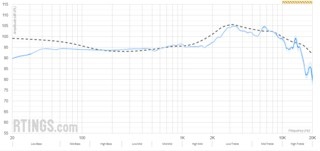
Impedance also influences frequency response. At higher volumes, impedance variations can cause changes in response or distortion in some headphones, affecting perceived sound quality.

Comparing High- and Low-Impedance Headphones
Power and amplification
High-impedance models generally need more power to reach optimal volume, making dedicated headphone amplifiers or equipment with strong output a suitable match. Low-impedance headphones convert electrical signals into sound more efficiently, allowing smartphones and laptops to provide adequate volume and audio quality.
Detail and accuracy
With high-quality amplification, high-impedance headphones often reproduce sound with greater precision and detail. Their impedance characteristics can improve driver control, reduce distortion, and increase clarity across the frequency range.
Low-impedance models may trade some fine detail for efficiency, but can still provide satisfying sound for casual or portable listening.
Source compatibility
The lower power demands of low-impedance headphones make them convenient for everyday use with smartphones, tablets, and laptops. High-impedance models are better suited to specialized setups with audiophile-grade sources and amplification, where sound quality and fidelity take priority over portability.
Choosing an Appropriate Impedance
- Start with your audio source. Consider whether you will mainly use a smartphone, laptop, dedicated headphone amplifier, or studio equipment. For portable devices, choose low-impedance headphones that can deliver sufficient volume and sound quality from the available power.
- Check your amplification. If you own or plan to buy high-impedance headphones, make sure your amplifier is compatible. Dedicated headphone amplifiers and high-quality audio interfaces typically provide the power these headphones need to perform fully.
- Consider your surroundings. Think about whether you listen at home, in a noisy setting while traveling, or in a professional studio. For portable listening or environments with ambient noise, the efficiency and volume output of low-impedance headphones can help keep listening immersive.
These considerations can help you select over-ear headphones whose impedance suits your sources, amplification, and listening preferences.
Frequently Asked Questions
Does higher impedance mean better headphones?
No. Suitability depends on your equipment and preferences. High-impedance headphones need more power but may sound better with appropriate amplification. For casual listening or portable devices, lower-impedance models can be more practical while still providing sufficient sound quality.
What impedance should headphones have?
The appropriate impedance for wired or wireless headphones depends on the equipment and intended use. Below 50 ohms is generally recommended for smartphones and laptops to support compatibility and efficient power use. Models above 100 ohms may suit audiophile setups with dedicated amplifiers, offering enhanced detail and sound quality.
Can impedance affect sound quality?
Yes, particularly in combination with amplification. A capable amplifier can help high-impedance headphones deliver better driver control and less distortion. Excessively high impedance, however, can create compatibility problems and poor performance with standard sources. Low-impedance models use power efficiently and work more readily with portable devices, though they may give up some sound quality compared with high-impedance alternatives.