
Headphones can press glasses into your temples, leaving sore spots or headaches during long listening sessions. Open-ear headphones offer an alternative by keeping their contact points away from where glasses sit.
Why Glasses and Conventional Headphones Can Conflict
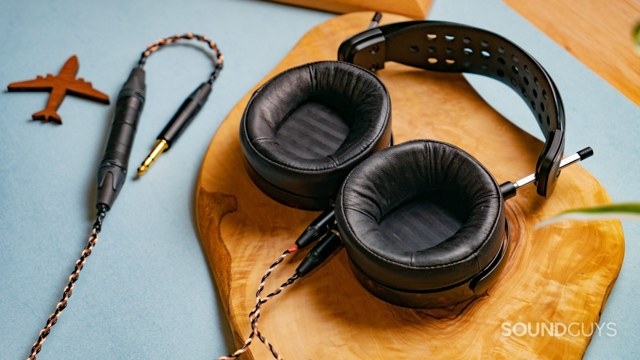
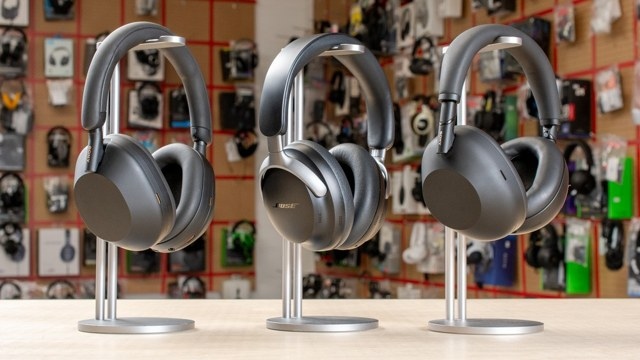
Over-ear and on-ear headphones rely on a seal around or against the ears to block outside noise and deliver deep bass. The headband’s clamping force can press the arms of your glasses into the sides of your head, causing pinching, soreness, or headaches. Earbuds present a different comfort issue: some cause fatigue or irritate the ear canal.
How Open-Ear Designs Reduce Pressure
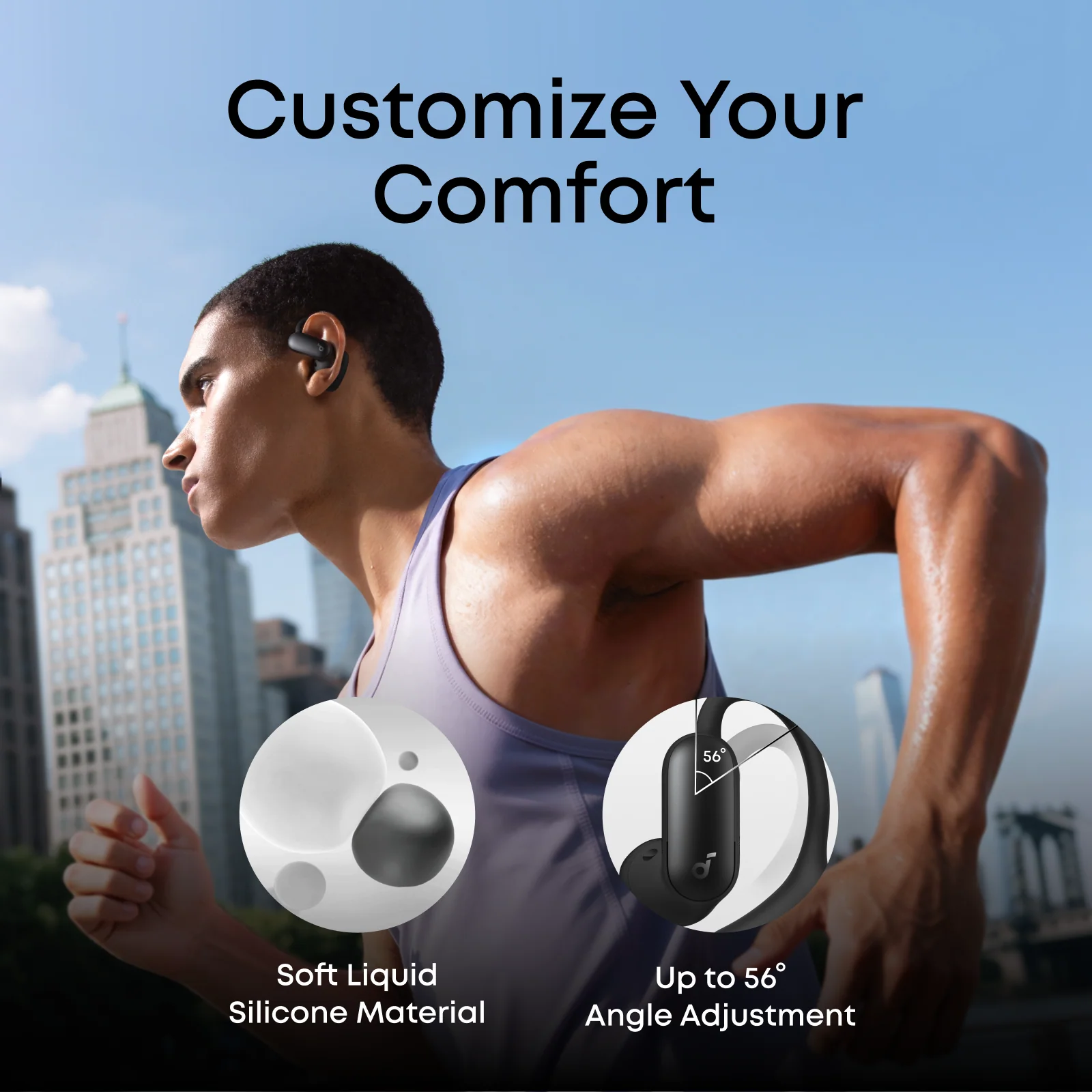
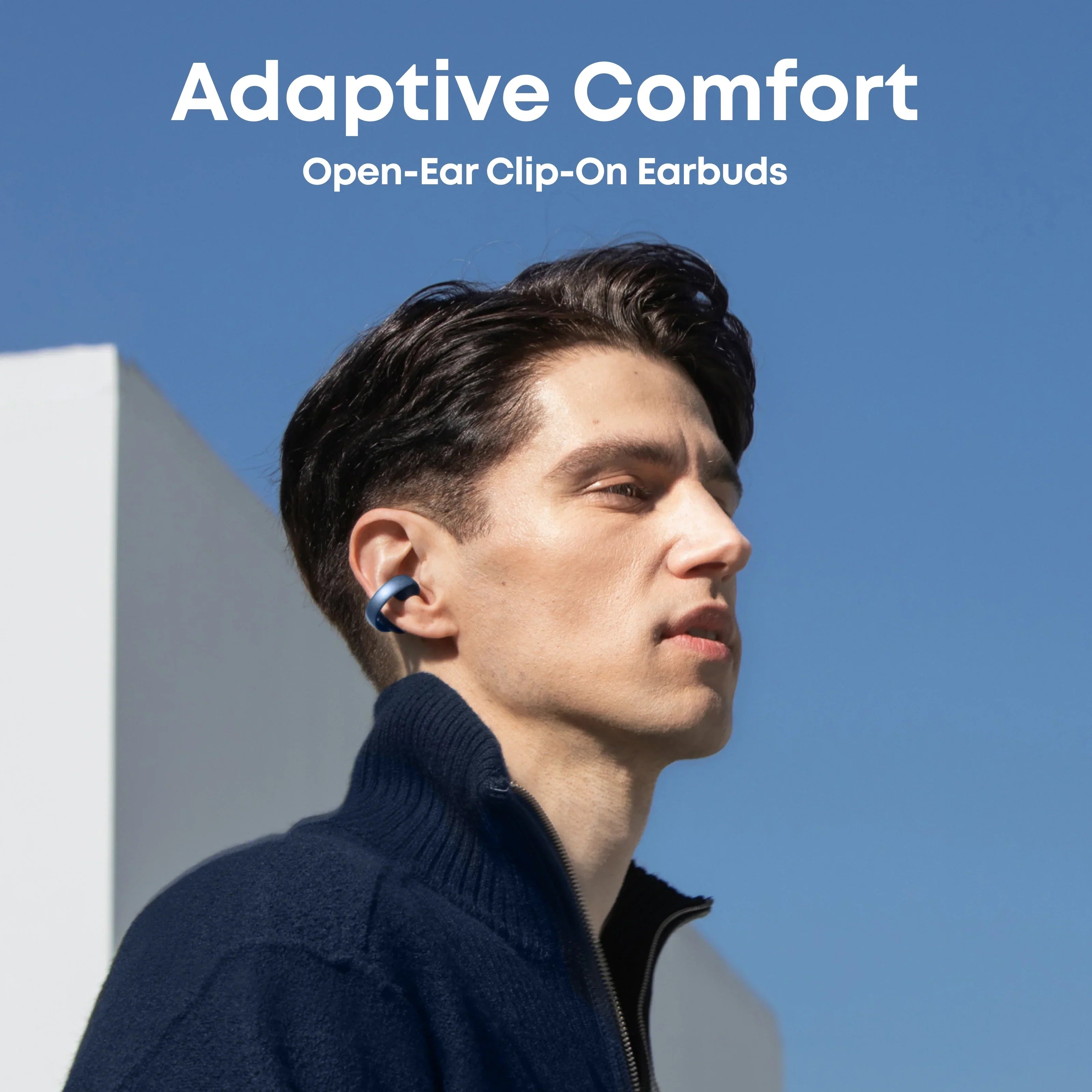
Open-ear headphones deliver sound without pressing against the usual problem areas. Common designs include bone conduction headphones, which sit in front of the ears, and clip-on earbuds, which rest on the outer ear. By avoiding the ear canal and glasses’ arms, these designs let you keep your glasses in their normal position without the pressure associated with conventional headphones.
Practical Comfort Tips for Glasses Wearers
Position the Headband After Your Glasses
If your over-ear open-ear headphones have a headband, put your glasses on first. Then move the headband slightly forward or backward until it no longer presses directly on the tops of the glasses’ arms. Aim to spread pressure away from that contact point.
Consider Lighter, Thinner Frames
Lightweight titanium or flexible acetate frames are more forgiving than heavy, rigid plastic or metal frames. Thin arms also leave less material for the headphone band to press against.
Pause Between Listening Sessions
Follow the 60/60 rule: keep listening volume at no more than 60% and sessions to no longer than 60 minutes at a time. During breaks, briefly remove both headphones and glasses to allow circulation and prevent pressure points.
Clean Contact Surfaces Regularly
Oil, dust, and skin cells can collect on glasses’ arms and headphone padding, increasing friction and irritation. Wipe your glasses and clean headphone cushions regularly with a soft, slightly damp cloth.
A Closer Look at the soundcore AeroClip
The soundcore AeroClip combines a stable clip-on fit with an open-ear design intended for comfortable listening without sacrificing sound quality.
Flexible, Pressure-Free Fit
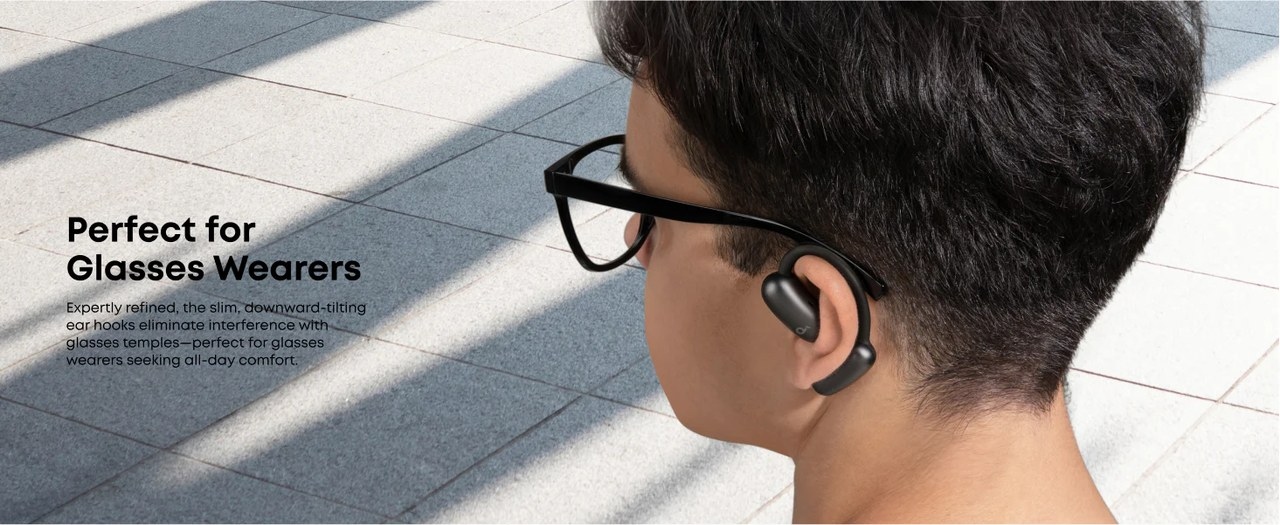
The soundcore AeroClip leaves the ear canal open, and its clip-on construction makes no contact with glasses’ arms. Its lightweight, flexible open-ring is engineered to withstand 20,000 bends and maintain a custom fit through years of all-day wear.
Audio with Added Bass
To address the bass limitations commonly associated with open-ear headphones, the AeroClip uses virtual bass technology and a 12mm customized, titanium-coated driver. It delivers clear sound and richer bass described as rivaling many in-ear models, while leaving your ears open to surrounding sounds.
Calls in Noisy Surroundings
Four beamforming microphones work with wind-blocking meshes and AI algorithms to keep your voice clear during calls, including in noisy outdoor environments.
Main Specifications
- Design: non-intrusive open-ear clip-on
- Weight: 5.9g (0.19oz) per earbud
- Playtime: 8 hours per charge, or 32 hours with the charging case
- Water resistance: IP55 protection against sweat and light rain
- Fast charging: 3 hours of playtime from a 10-minute charge

Balancing Fit, Sound, and Function
The right choice depends on your comfort, sound, and practical needs. Among open-ear options, clip-on models such as the soundcore AeroClip combine stability and audio quality with no pressure on glasses. Frame choice, careful positioning, regular breaks, and cleaning can further improve the listening experience.