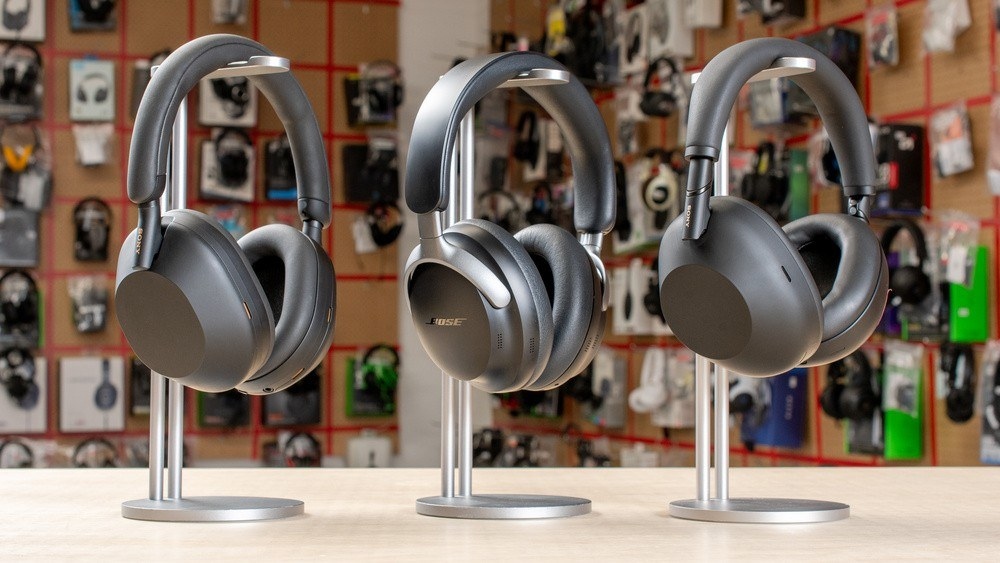
The 2025 Sony WH-1000XM6 face two strong alternatives: Sony's previous flagship, the 2022 WH-1000XM5, and the Bose QuietComfort Ultra Headphones. This comparison examines where each stands out in noise cancellation, sound, comfort and everyday use, without replacing the source's full individual reviews.
Key comparisons at a glance

The table summarizes the main differences between the two Sony models and the QuietComfort Ultra, also called the QC Ultra.
| Winning Attributes | |
|---|---|
| Most Comfortable | Winner: Bose QuietComfort Ultra Headphones Runner-Up: Sony WH-1000XM6 |
| Longest Continuous Battery Life | Winner: Sony WH-1000XM6 Runner-Up: Bose QuietComfort Ultra Headphones |
| Best Microphone | Winner: Sony WH-1000XM6 Runner-Up: It's complicated. |
| Most Customizable | Winner: Sony WH-1000XM6 Runner-Up: Sony WH-1000XM5 |
| Best Noise Isolation | Winner: Sony WH-1000XM6 Runner-Up: Bose QuietComfort Ultra Headphones |
| Best Sound Quality | It's complicated. |
| Best Connectivity | Winner: Sony WH-1000XM6 and Bose QuietComfort Ultra Headphones (Tie! It depends!) |
Which headphones cancel the most noise?
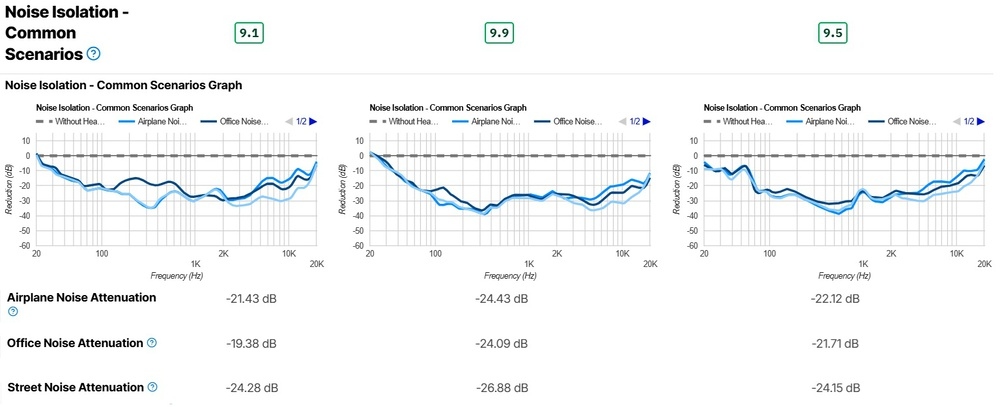
The WH-1000XM6 lead in active noise cancellation (ANC) and isolation, although the advantage may be difficult to notice in everyday listening. In the source's common-scenario isolation tests, they scored 9.9, ahead of the previously leading QC Ultra at 9.5 and the WH-1000XM5 at 9.4. The XM6 and Bose perform similarly in practice; the XM5 also excel, but have slightly more trouble suppressing office noise.
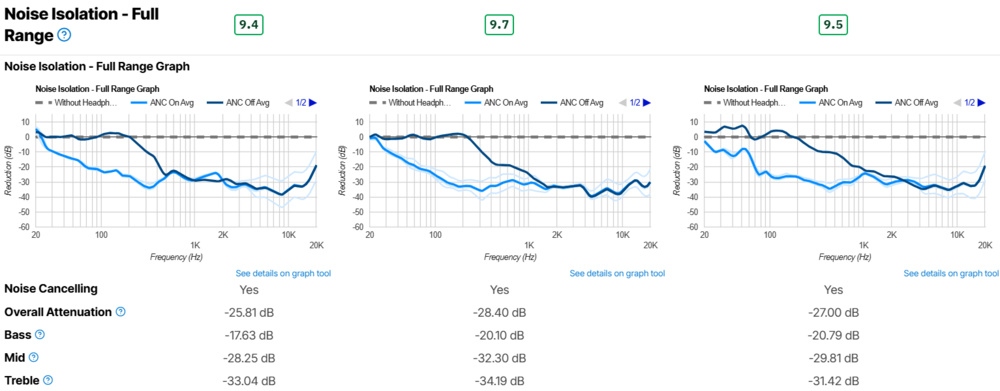
All three earned scores in the nines for full-range isolation. At this level, small numerical gains bring diminishing returns, and most listeners should be happy with any of them. The graphs show which frequencies each blocks most effectively, while the overall numbers put the WH-1000XM6 ahead of the Bose.
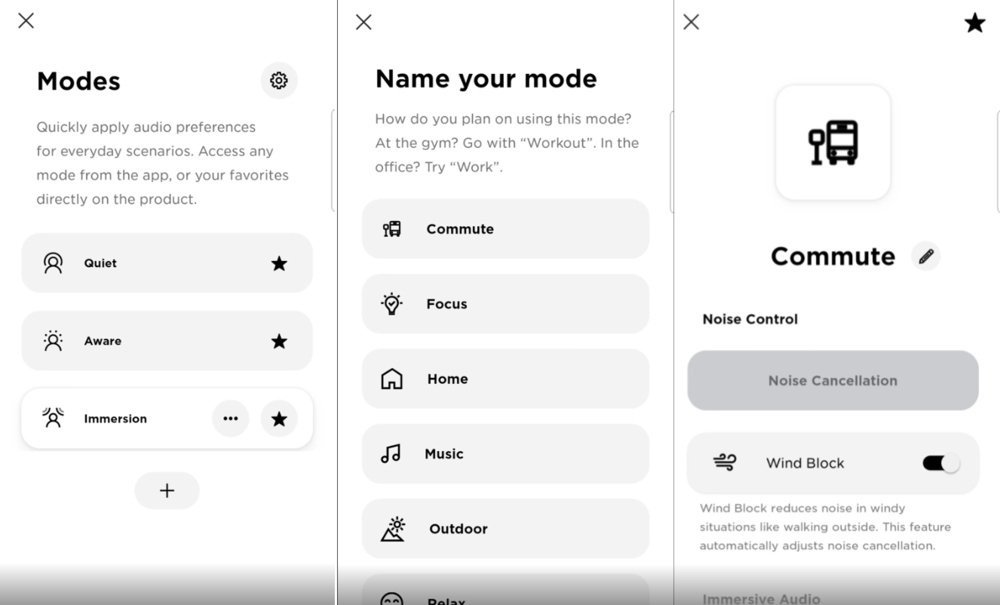
The QC Ultra lack a standard listening mode with both ANC and Aware, Bose's transparency mode, switched off. The WH-1000XM6 provide adjustable ambient mixing, similar to the QC Ultra's customizable Aware presets. On the WH-1000XM5, ambient mode is Adaptive only.
Both Sony models include Speak-to-Chat, which pauses playback and activates ambient listening when you speak. They also offer Quick Attention Mode: placing your palm over the touch panel temporarily enables ambient sound, useful for hearing travel announcements without removing the headphones.
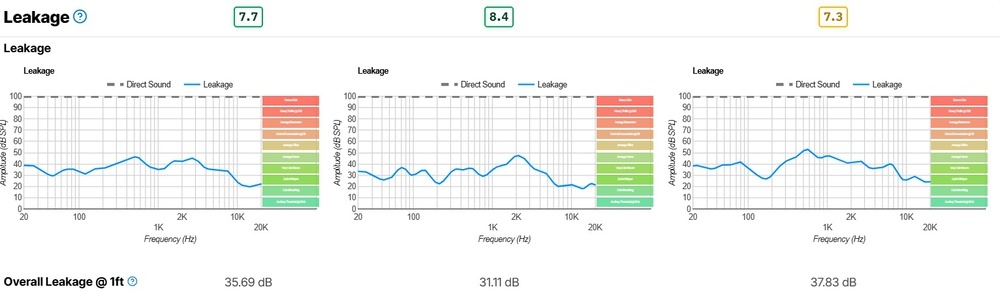
The XM6 are least likely to disturb nearby listeners. The XM5 leak only a little more, whereas the Bose release the most audio. Whether others hear it depends on listening volume, distance and surrounding noise.
How their sound differs
Each model includes a graphic EQ and presets, but Sony provides more adjustment than Bose's three-band EQ. That extra flexibility may be irrelevant if you already like the Bose tuning. Both Sonys sound full and warm; the QC Ultra are also warm, with a flatter mid-range.
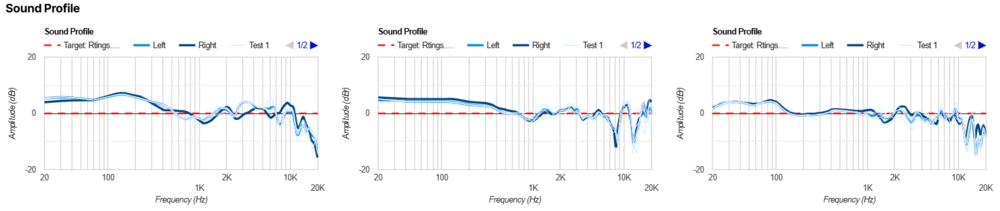
The QC Ultra combine the most analytical mid-range with pronounced deep-bass rumble. The WH-1000XM5 sound bassiest and can seem boomy or bloated, although their clear, bright upper frequencies help counterbalance that impression. The WH-1000XM6 retain a similar character, with a more even boost across bass and low-mids. Their elevated low end can mask higher frequencies for some listeners.
All three reproduce clear treble, but the XM6 have narrow areas of reduced harmonic energy that some may enjoy, at the expense of the transparency offered by the other two. The Bose generally deliver detailed, mostly flat treble without becoming piercing.
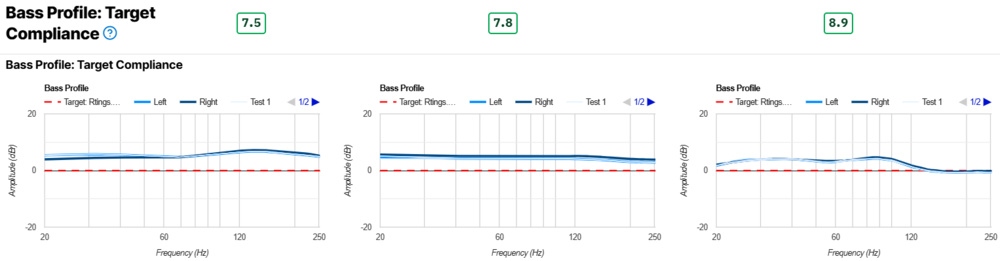
Neither Sony has a strongly tilted bass response: both add smooth thump and boom to 303 basslines and 808 kicks. That emphasis extends into the low-mids, giving bass-guitar harmonics and power chords more weight, but potentially crowding busy mixes.
The Bose instead use a broad low- and mid-bass peak, while their high-bass comes closest to the source's target. Sub-bass synths retain their rumble without as much added high-bass and low-mid warmth. Whether that separation is preferable to Sony's fuller presentation largely comes down to taste.
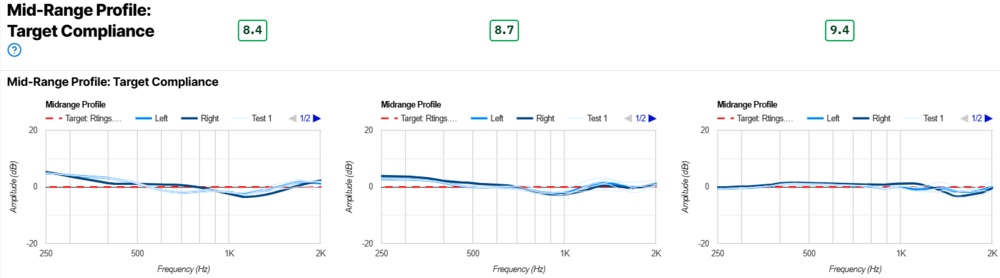
Mid-range balance is generally good across the group. Both Sonys slightly recess the middle while emphasizing the low- and high-mids. The XM6's shallower dip leaves voices and melodic instruments subtly more prominent than on the XM5. The Bose have the most even mid-range, giving lead instruments a more natural presentation.
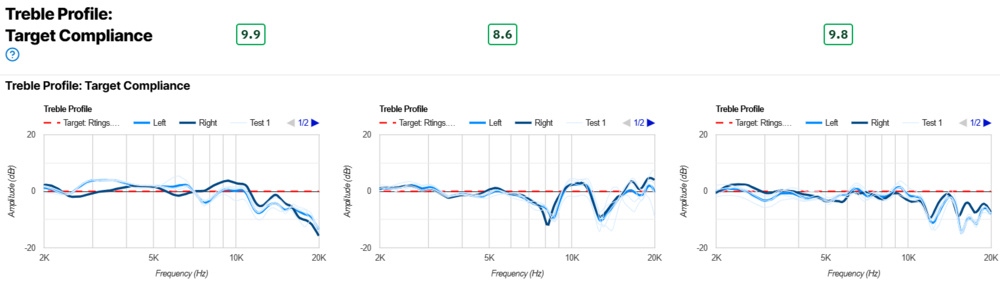
Low-treble vocals remain intelligible on all three. The QC Ultra have a smooth, detailed response with relatively small irregularities, while the WH-1000XM5 closely follow the source's target for clear articulation and bright transients.
The XM6 retain low-treble detail, but narrow mid- and high-treble dips reduce presence, sibilance and brilliance. Cymbals can consequently sound splashy or lack depth, even as nearby narrow peaks add sharpness and air to their harmonics. Both the XM5 and Bose roll off in the high-treble; perception above 10kHz varies with individual hearing sensitivity.
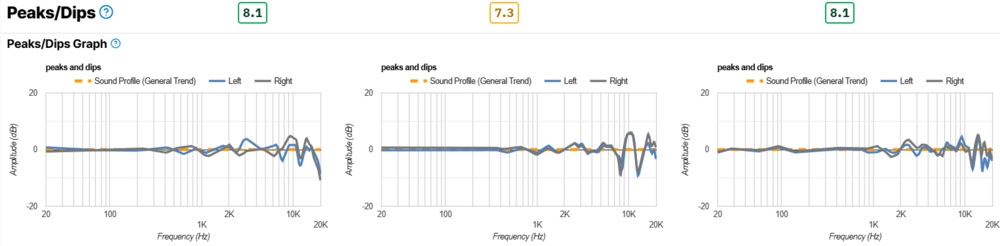
The XM6's treble irregularities can make harmonics sound either veiled or piercing, so the other two score better for peaks and dips. Both Sony models nevertheless maintain smooth bass and mid-range performance. The QC Ultra have a gentle high-bass peak absent from the Sonys, adding a little boom.
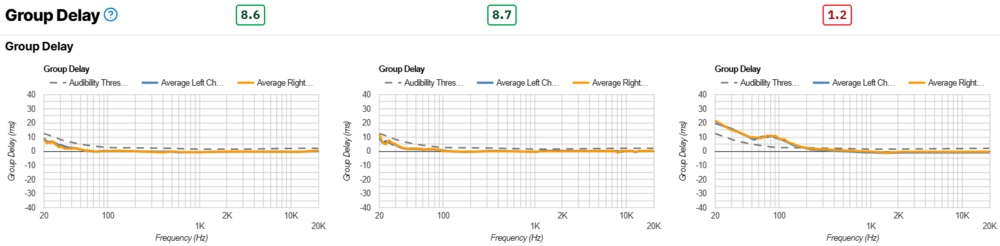
Excellent group delay results give both Sonys tight, controlled bass. Higher group delay makes the tested Bose's bass less defined, although results can differ between units of the same model. All three keep harmonic distortion low even at high output, with the Bose adding more low-frequency coloration that is unlikely to be audible.
The WH-1000XM5 achieve the best overall stereo mismatch result. However, that score combines weighting, audibility thresholds and multiple test conditions; it does not mean they substantially outperform both rivals in every respect. The individual source reviews provide further detail.
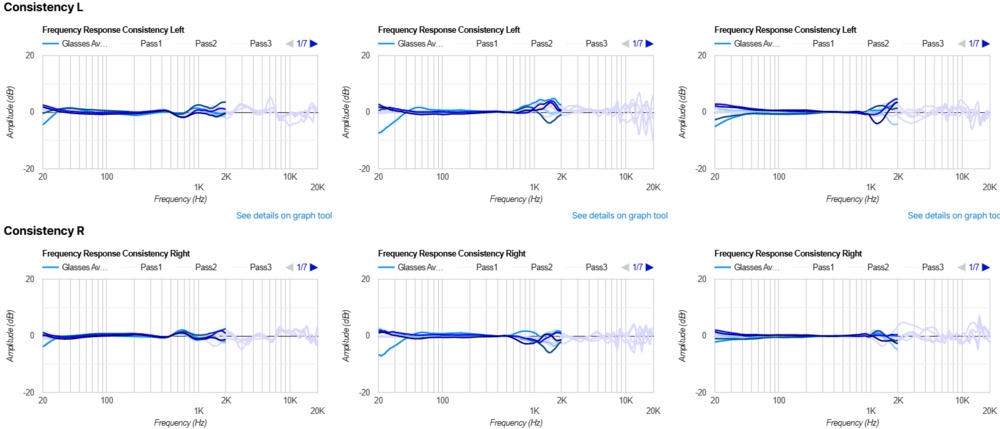
Glasses caused low-bass loss on all three, a common outcome. The XM5 showed the smallest overall response variations, although long hair tended to increase their high-mids. The Bose were slightly more consistent than the XM6, whose softer earpads allow greater low-bass and mid-range changes with head shape, hair and other physical characteristics. Without glasses, the XM6's bass was otherwise consistent. Fit therefore matters as much as the measured tuning.
Comfort, construction and controls
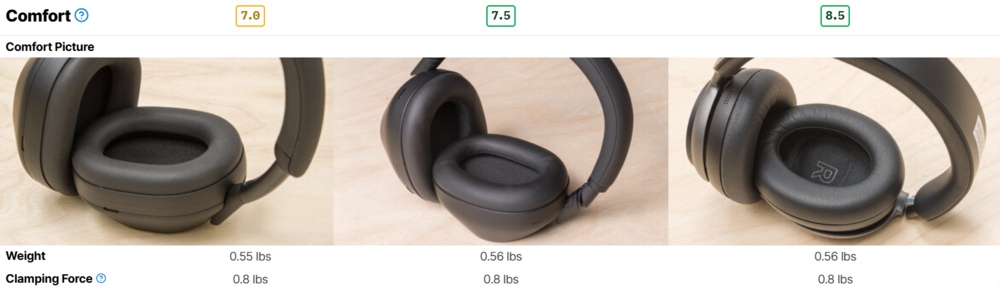
The Bose are the most comfortable and portable option, with the smallest carrying case and generous room for the ears. The XM6 feel similarly well-built out of the box. Their revised yokes and hinges appear to address concerns about the XM5's breakage-prone hinges.
The XM5 have more ear space than the shallower XM6, but the newer model distributes weight more evenly. Like the Bose, the XM6 fold for storage; the XM5 do not normally fold, except when something has gone badly wrong.
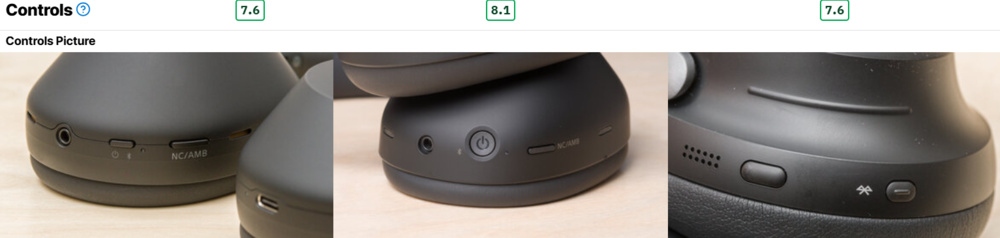
The XM6 offer the broadest control scheme: physical buttons, a right-ear-cup touch panel and gestures. Compared with the XM5, they add microphone muting and buttons that are easier to distinguish by feel.
All three can misread inputs. Sony's touch panels and Bose's volume slider sometimes lack precision, while head-shake gestures on both Sonys proved unreliable for handling calls hands-free. The Bose take a simpler approach, centered on a practical, effective multi-function button.
Bluetooth and wired connections
All three support pairing with two devices, plus SBC and AAC. AAC covers most Apple users' needs. Both Sonys also support LDAC, while the XM6 add LC3 as part of Bluetooth LE Audio. Bose offer a suite of aptX Adaptive codecs, but not backward compatibility with aptX HD.
The connected device must support the same codec. iOS is optimized for AAC, some Samsung devices do not work well with every aptX codec, and LC3 support remains relatively immature. Actual options therefore depend on your device.
| Connections | Headphones | ||
|---|---|---|---|
| Sony WH-1000XM6 | Sony WH-1000XM5 | Bose QuietComfort Ultra Headphones | |
| LDAC | Yes | Yes | No |
| AAC | Yes | Yes | Yes |
| aptX Adaptive (Low Latency)/(High Quality) | No | No | Yes |
| LC3 (LE Audio) | Yes | No | No |
| SBC | Yes | Yes | Yes |
| Analog wired | Yes (passive and active) | Yes (passive and active) | Yes (active-only) |
The QC Ultra achieve low latency with aptX Adaptive (Low Latency). Similar performance is expected from the XM6 over LC3, but compatibility problems prevented the source from verifying it on its test rig. The XM5 provide the fewest options for reducing latency, although real-world results also depend on devices and apps.
None support USB audio. Each includes an analog cable, with virtually no wired latency on either Sony. Bose's wired latency is unusually high for analog audio, but not enough to cause A/V synchronization problems. The QC Ultra must remain powered on for wired playback; both Sonys can operate passively.
Sony Sound Connect versus Bose Music
Check compatibility with your particular device and OS version. Phone manufacturers may impose restrictions beyond those built into the operating system. Some Android restrictions can be bypassed through Developer Settings, but not on every model.
All three offer forms of virtual surround sound. Their usefulness depends heavily on streaming-service compatibility, subscriptions and, sometimes, the device itself; the source's individual reviews cover these limitations in more detail.
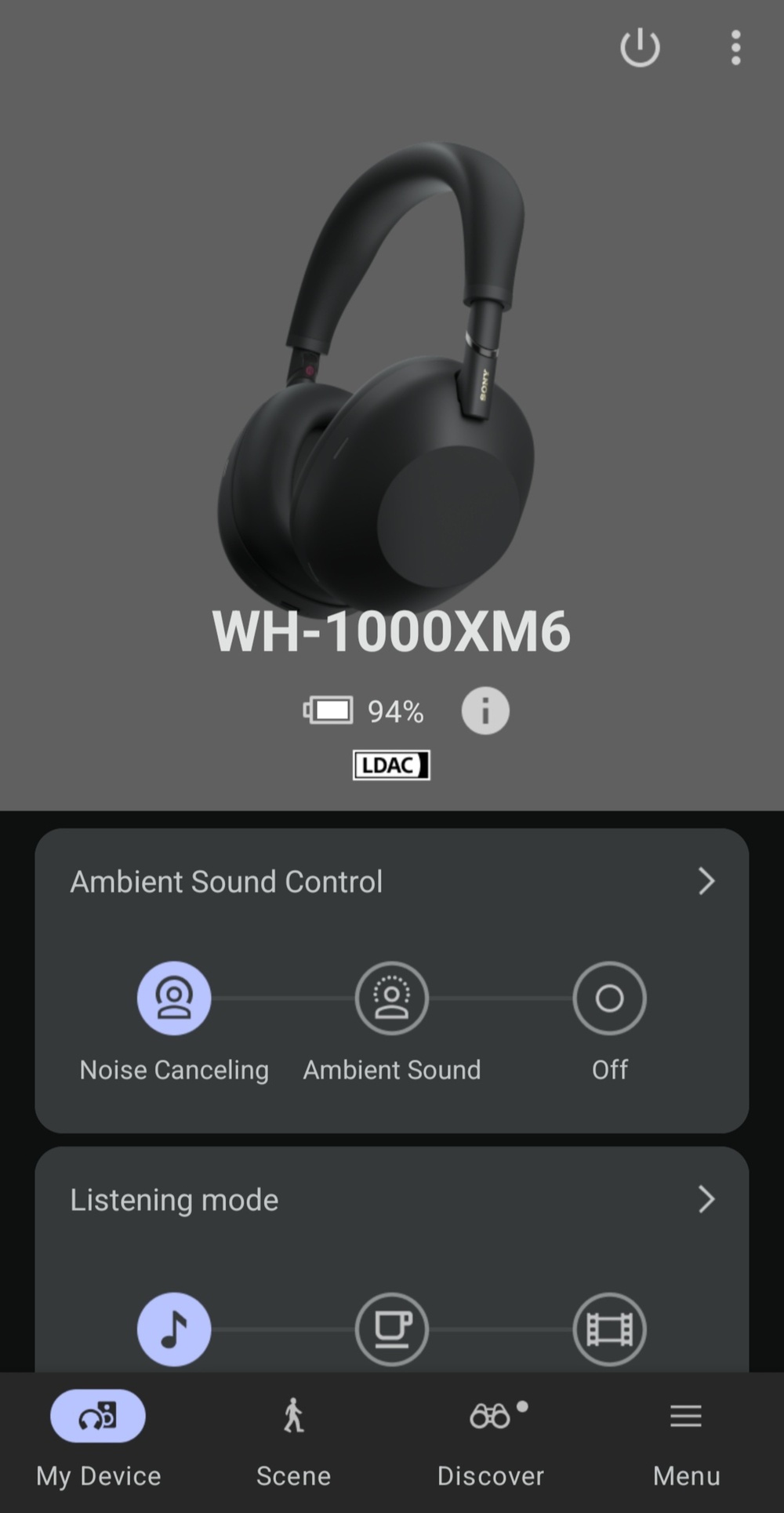 | 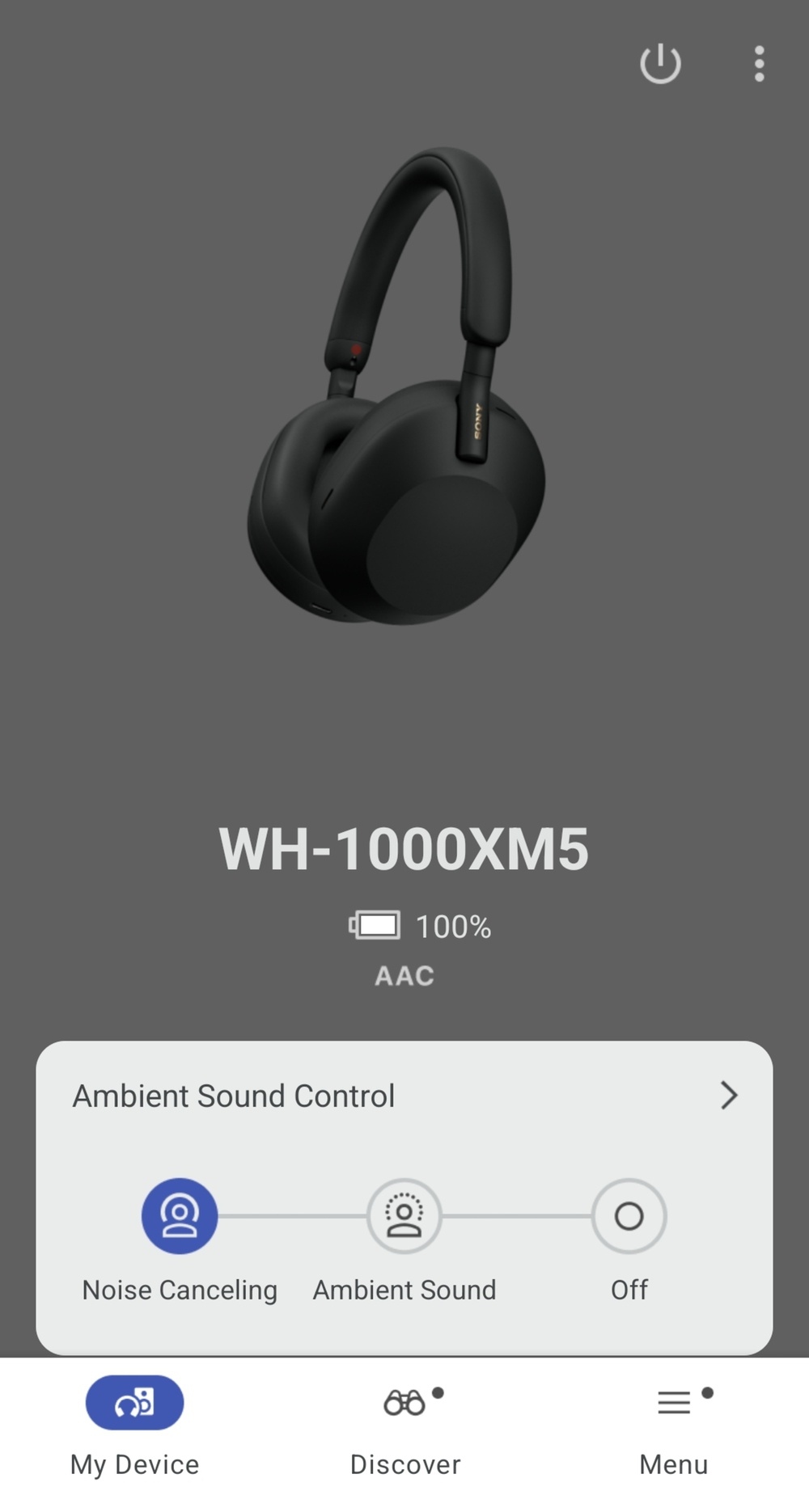 |
The Sony headphones both use the same app with largely similar features. | |
The Sony models share Sony Sound Connect for iOS/Android, with largely identical features and virtually the same experience on Apple and Android apart from codec differences. The source also provides an interface video walkthrough using the XM6.
Sony offers deeper customization than Bose Music, including control reassignment, a comprehensive custom EQ, codec selection when enabled on the connected device, and listening-mode switching. Adjustable Ambient mixing is exclusive to the XM6 among the two Sonys.
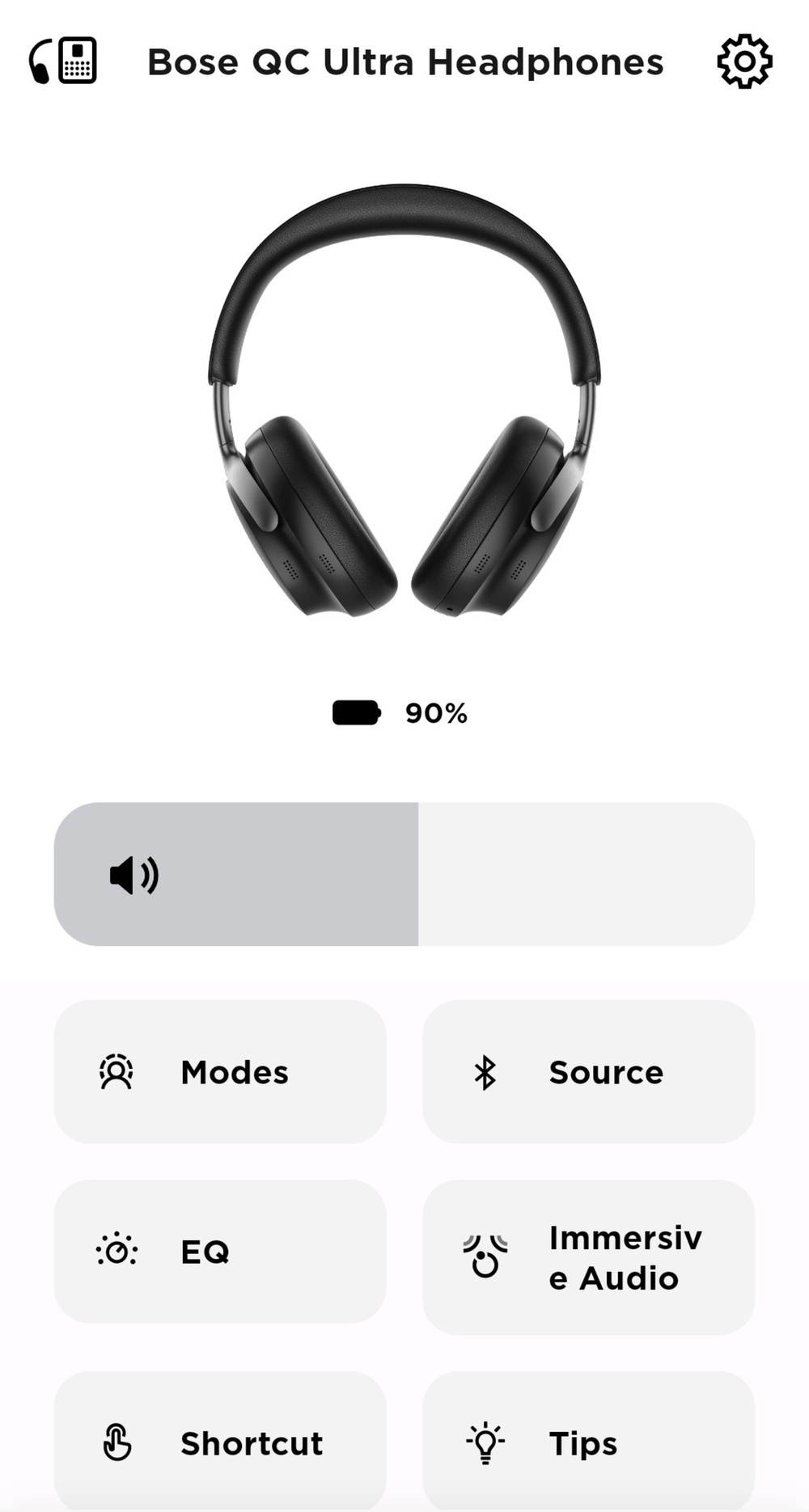
Bose Music for iOS/Android is simpler but covers the essentials. Its 'Shortcuts' let you reassign controls, likely to switching ANC/Aware modes because no dedicated physical control does that by default. The three-band EQ and presets provide less detailed tuning than Sony's EQ, while customizable ANC and Aware presets accommodate different situations. Both brands also let users manage other products, such as speakers and soundbars, within their broader app ecosystems.
Microphone quality and background-noise rejection
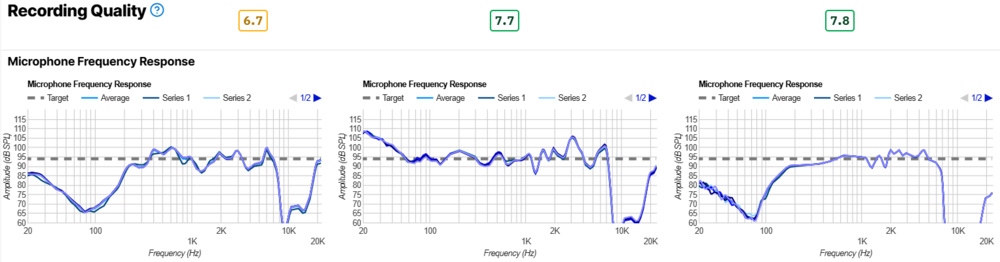
Only the XM6 provide microphone muting. Their recording-quality score is similar to the QC Ultra's, and both sound very good, though their microphone tuning differs.
The Bose have a flatter, potentially more natural response, but their bass roll-off can thin out deeper voices. The XM6 preserve more low end, with treble peaks that can sound sharp. The XM5 trail both, combining a narrower response range with more peaks and dips. The source's recordings allow listeners to compare these differences directly.
Microphone performance also depends on compatibility with the connected device. LC3 noticeably improves the XM6 microphone compared with the source's standardized test results, but support is not widespread. At the time of writing, LC3 support for the XM6 was in beta testing. All three transmit microphone audio only over Bluetooth.
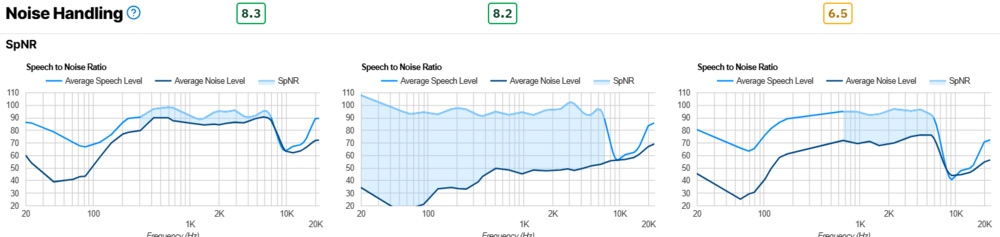
For calls in noisy places, the XM5 and XM6 suppress background noise better than the Bose. The source's audio examples demonstrate their respective trade-offs.
Questions to guide your choice
Your intended use and connected devices should drive the decision.
| Priority | What to consider |
|---|---|
| Microphone quality and noise rejection | The XM6 tend to be best for noisy calls. The QC Ultra are worth considering when background noise is less important. |
| Codecs beyond AAC and SBC | Confirm that your device supports the relevant option: LC3, LDAC or aptX Adaptive. |
| Comfort and ear space | The Bose are most comfortable for most people. Larger ears may touch the smaller, shallower XM6 cups. The XM5 have ample ear space but distribute weight less evenly. |
| Folding for travel | Overall portability is similar, but the XM5 lack folding hinges. |
| Listening modes | The Bose lack a standard mode without ANC or Aware. Only the XM6 offer adjustable Ambient mixing among these Sony models. |
| Control preferences | The XM6 offer the most extensive controls, broadly resembling the XM5. The Bose suit those who prefer a mostly button-based layout. |
| Sound and EQ flexibility | Choose the tuning you enjoy and consider how extensively you want to adjust it. |
Should existing owners upgrade to the XM6?
For most WH-1000XM5 or QC Ultra owners, the XM6's evolutionary improvements do not justify upgrading. Prices vary and will influence that decision, but diminishing returns are important here.
Viewed on performance alone, the XM6 are the most rounded option and slightly ahead on most measures, with comfort and frequency response consistency notable exceptions. All three remain strong performers, so the best choice depends on which trade-offs matter most to you.
Update history
07/04/2025: Initial publication.